

THE SCIENCE OF THE NEURAL LOCK
Why most meditation tracks fail—and how H.E.M.S. fixes the engineering.
HEMS Precision Steps Vs Standard Binaural
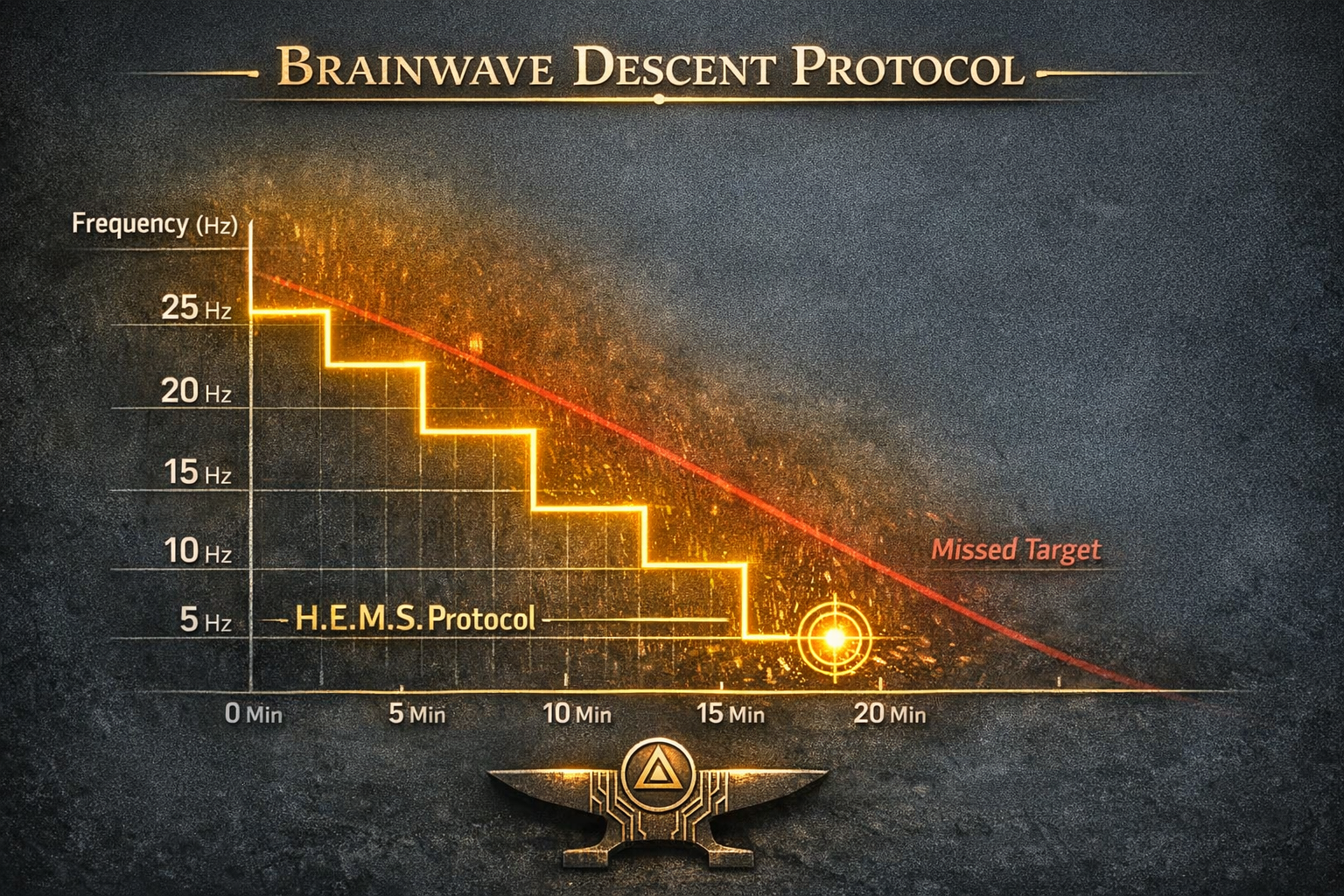
Figure 1.0: Visual representation of the H.E.M.S. Synchronized Staircase. While standard providers use a linear slope that often fails to achieve a neural lock, H.E.M.S. uses precise, timed steps to steer the nervous system toward the target frequency.
The "Stagnant Slope" Problem
Many meditation apps and YouTube tracks use a "steady slope" or a single stagnant frequency. If you are awake at 12Hz and the audio starts at 5Hz, the gap is too wide. Your brain cannot bridge the distance, leading to distraction, frustration, or simply falling asleep.
The H.E.M.S. Synchronized Staircase
At the Hogan Laboratory, we don't expect your brain to jump; we ask it to climb. Our 20-minute protocols use a timed staircase method to ensure your biology stays locked to the frequency, for example:
- Phase 1: 2 Minutes at 12Hz (The Neural Handshake)
- Phase 2: 1-Minute Controlled Descent
- Phase 3: 2 Minutes at 11Hz (Stabilization)
- Continuous: This pattern repeats until the bit-perfect lock is achieved at your target state.
Active Neural Engagement
H.E.M.S. protocols include proprietary 30-second oscillation shifts (e.g., 5-8Hz cycles). This prevents the brain from becoming stagnant, keeping your nervous system actively engaged and synchronized rather than drifting away.